
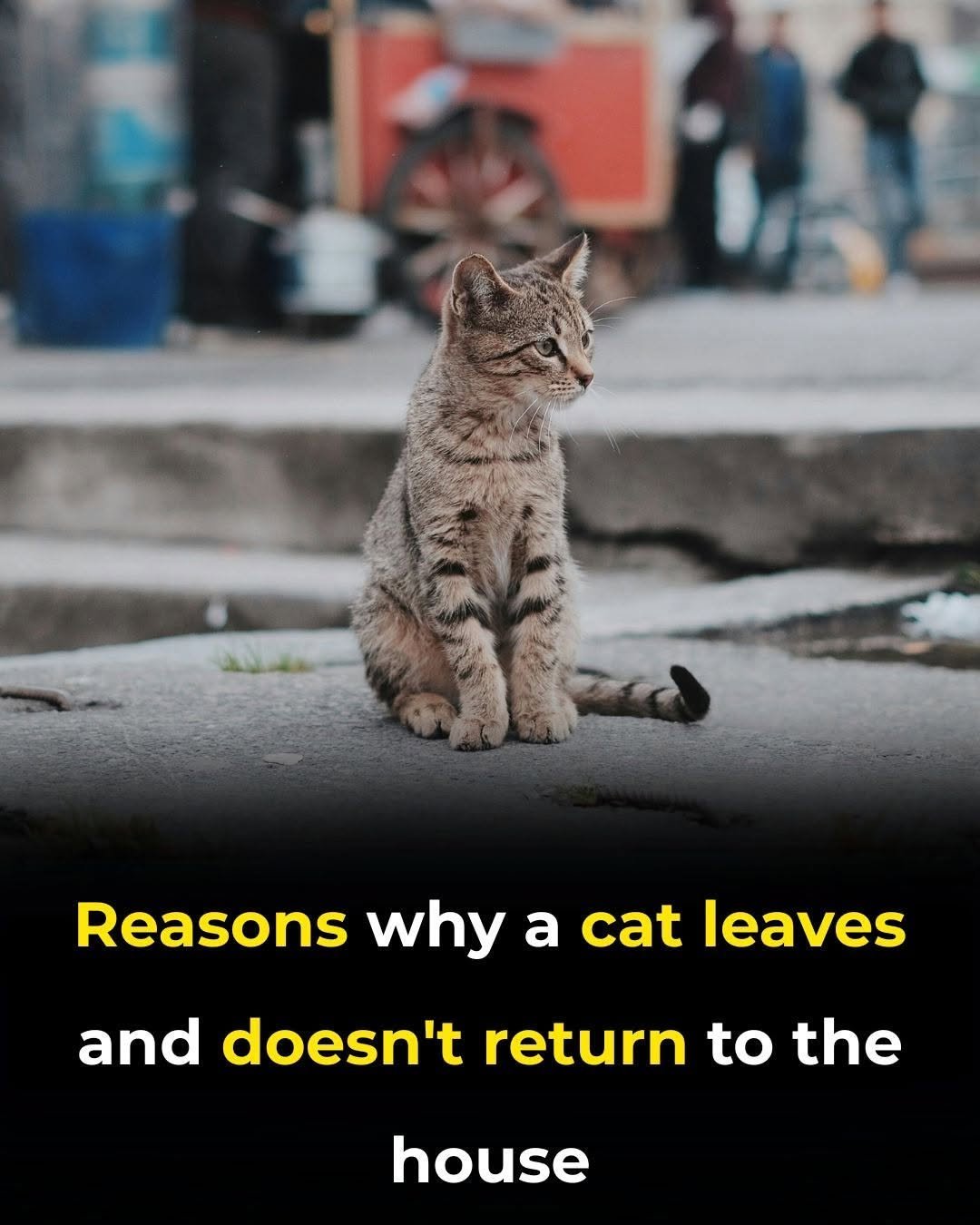
Why Cats Leave Home and Don’t Return: Common Reasons and What You Can Do
Cats are curious, independent animals, and their adventurous nature can sometimes cause concern for their owners.
When a cat suddenly leaves home and does not return, it can be extremely stressful and upsetting. Fortunately, there are several common reasons why cats wander away, and understanding these reasons can help owners prevent future disappearances.
1. A Natural Instinct to Explore
One of the simplest reasons cats leave home is their natural curiosity.
Cats have a strong territorial instinct and enjoy exploring their surroundings. Even a well-fed and well-loved cat may wander away simply because it wants to investigate new smells, sounds, and places.
An outdoor cat may travel several blocks or even farther during an adventure.
Sometimes, however, a cat can travel farther than expected and become confused or unable to find its way home.
How to Help
You can reduce the risk by:
- Using a collar with an identification tag
- Having your cat microchipped
- Considering a GPS tracker for cats that frequently roam
- Providing safe opportunities for outdoor exploration
2. The Mating Instinct
If a cat has not been spayed or neutered, hormones can strongly influence its behavior.
Cats may leave home in search of a mate, particularly during mating periods.
Male cats are especially likely to travel considerable distances when searching for females.
Unfortunately, roaming increases the risk of:
- Getting lost
- Being injured
- Fighting with other animals
- Being exposed to infectious diseases
- Getting involved in traffic accidents
Spaying or neutering your cat, when recommended by a veterinarian, can help reduce roaming behavior.
3. Conflict With Other Animals
Cats are highly territorial.
If another cat enters their territory, particularly an aggressive or dominant cat, your cat may decide that leaving is safer than fighting.
Dogs and other animals can also make a cat feel threatened.
This can be particularly common in neighborhoods with many outdoor or feral cats.
Creating a Safer Environment
Providing your cat with a secure indoor environment can reduce these risks.
If your cat spends time outdoors, consider providing:
- Safe hiding places
- Covered areas
- Secure escape routes
- An enclosed outdoor space such as a catio
These options allow cats to enjoy outdoor stimulation while reducing exposure to danger.
4. Getting Lost or Disoriented
Although cats often have impressive navigation abilities, they can still become lost.
Loud noises, construction, traffic, unfamiliar surroundings, or blocked routes can cause a cat to become disoriented.
Sometimes a cat may not actually be far away. It could be hiding nearby or accidentally trapped inside a garage, shed, or another enclosed space.
If Your Cat Goes Missing
Search nearby areas carefully, including:
- Under decks
- Behind sheds
- Inside garages
- Under cars
- In bushes
- Around neighboring properties
Ask your neighbors to check their garages, sheds, gardens, and other places where a frightened cat could hide.
You can also place familiar-smelling objects near your home, such as bedding, to help your cat recognize the familiar scent.
5. Illness or Injury
A sick or injured cat may behave very differently from normal.
Cats often instinctively hide when they feel vulnerable.
If a cat becomes injured or ill while outside, it may find a quiet hiding place and remain there instead of returning home.
This is one reason why searching nearby hiding spots is especially important when a normally reliable cat suddenly disappears.
Regular veterinary checkups can also help detect health problems before they become serious.
6. Stress or Changes at Home
Cats are creatures of habit.
Major changes in their environment can cause stress, including:
- Moving to a new home
- Renovations
- A new pet
- A new baby
- Loud visitors
- Changes to furniture
- Changes in daily routines
Some cats may respond to these changes by hiding, while others may attempt to leave the area.
Il resto è nella pagina successiva
